2021: The Year That Redefined B2B Marketing
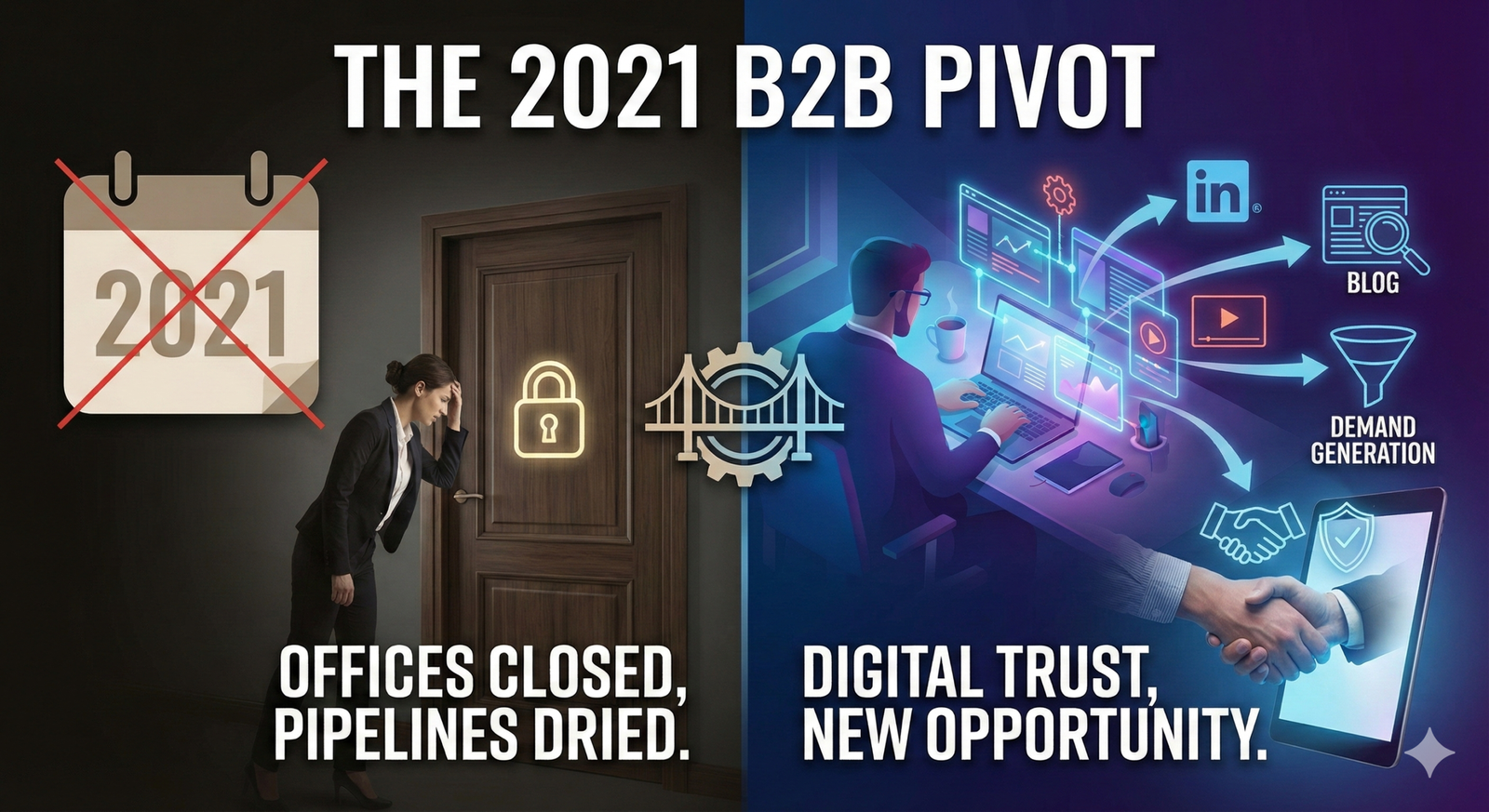
Remember the chaos? The year 2021 wasn't just another page in the calendar. It was a tipping point. Businesses everywhere scrambled to adapt, and the world of B2B marketing was turned inside out.
This isn't about following a trend; it's about understanding a fundamental evolution. Let's look back at how B2B lead and demand generation evolved in 2021—not as history, but as the essential blueprint for what works today.
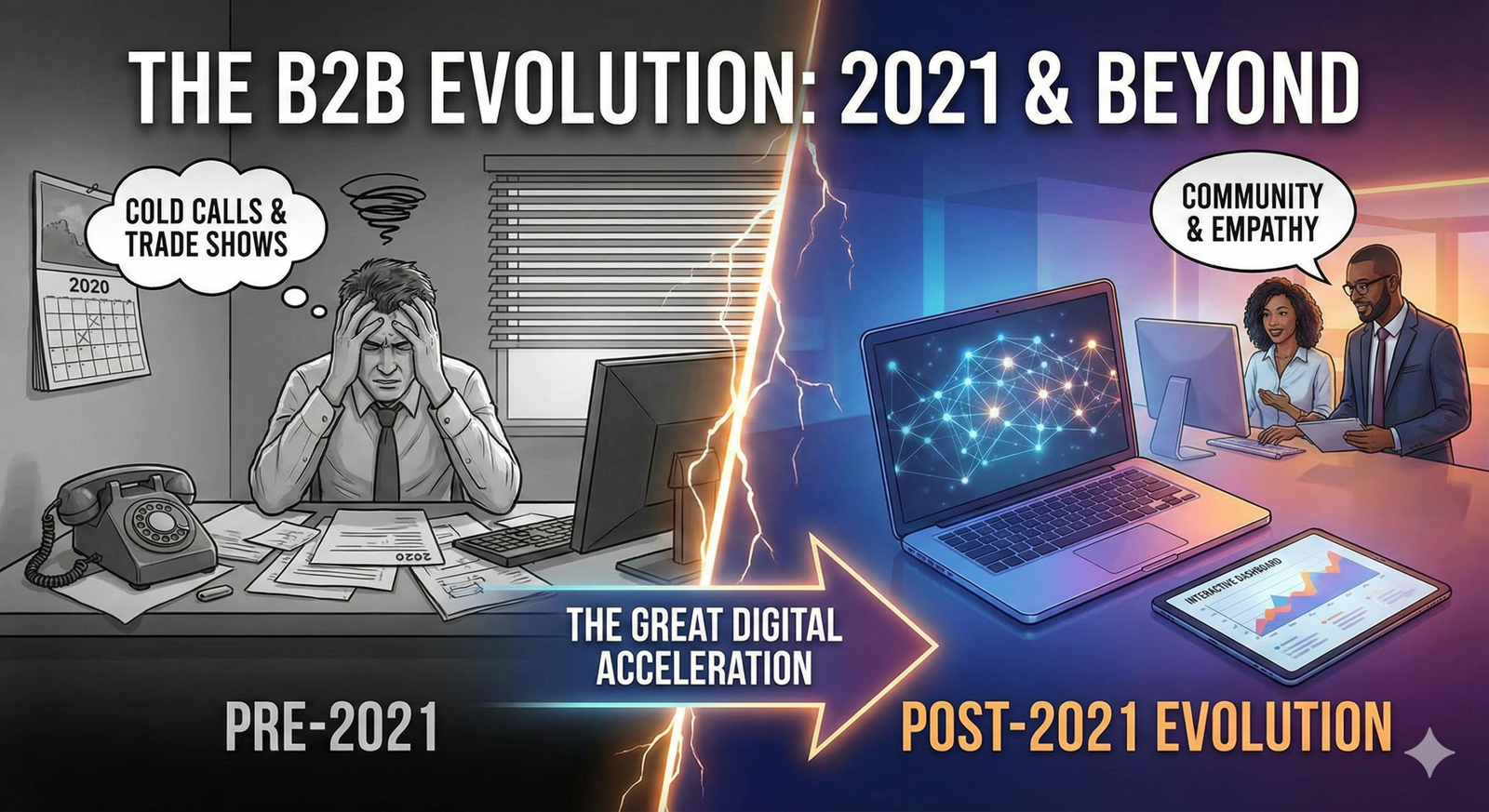
The Great Digital Acceleration: From Option to Obligation
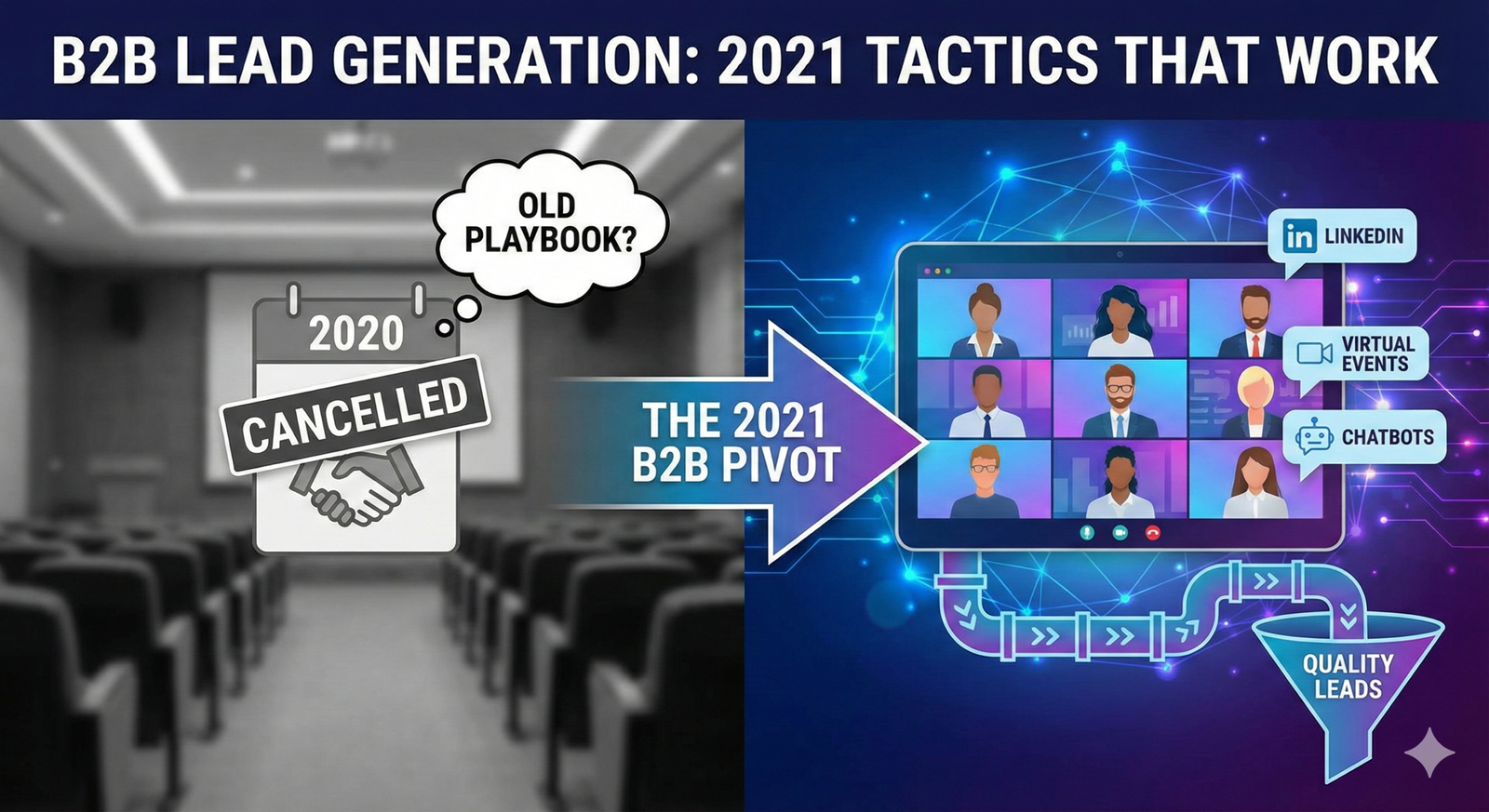
Before 2021, digital channels were part of the mix. That year, they became the entire playing field. With in-person events and office drop-ins impossible, every business conversation moved online. This wasn't a small shift—it was a seismic leap forward by five years in just 12 months.
The companies that thrived didn't just move their brochures online. They rebuilt their entire approach from the ground up.
Sales Transformation
Sales teams learned to build rapport through a screen. Marketers stopped talking about "digital transformation" and actually lived it.
Redefined First Impressions
The most successful B2B players realized that a prospect's first "site visit" was no longer their office park—it was their LinkedIn profile, their website's loading speed, and the helpfulness of their blog.
Four Defining Shifts in B2B Strategy
So, what exactly changed? Let's break down the four core areas where 2021 rewrote the rules of B2B engagement.
The Rise of the Empathetic Narrative
Gone were the days of feature-heavy, boastful messaging. In a year of global uncertainty, buyers needed partners, not pitchmen. B2B copywriting underwent a massive tone shift.
"Our platform leverages cutting-edge AI to deliver unparalleled synergistic outputs."
"Is your team burned out on manual reports? Let's automate the busywork so you can focus on what matters."
Marketing became less about shouting superiority and more about whispering, "We understand." Case studies started highlighting challenges and vulnerabilities, not just shiny results. This human-first approach didn't just build leads; it built trust—the ultimate currency in modern B2B.
Interactive Content Took Center Stage
Static PDF whitepapers and lengthy e-books began gathering digital dust. Attention spans were shorter, and the demand for immediate, personalized value skyrocketed.
Interactive tools became the superstar of B2B lead and demand generation.
"Score your current cybersecurity posture."
Custom tools that let prospects input their own numbers.
Using live polls, Q&A, and breakout rooms.
Why did this work? It traded passive reading for active participation. A prospect who spends 5 minutes with your calculator is far more engaged than one who downloads a PDF they may never open. This shift turned content from a business card into a conversation starter.
Sales and Marketing Became Inseparable
The "handoff" from marketing to sales always had its fumbles. In 2021, that broken process became a glaring liability. With tighter budgets, every lead had to count. Siloed teams couldn't afford to exist.
The New Collaboration
Companies that excelled blurred the lines entirely. Marketing teams sat in on sales calls to hear prospect objections firsthand. Sales teams provided marketers with raw voice-of-customer data to shape campaigns.
They built shared goals around lead quality and pipeline velocity, not just lead quantity. This alignment ensured that the demand generated by marketing was the exact type of demand sales wanted to close.
Community Became a Channel
Perhaps the most profound evolution was the move from audience-building to community-building. Brands stopped just broadcasting and started facilitating.
LinkedIn Groups, dedicated Slack channels, and expert roundtable webinars exploded. The goal wasn't to sell to the community but to provide a valuable space for peers to connect and solve problems.
Example: A SaaS company serving HR professionals might create a "Future of Work Leaders" community.
This strategy genius: by owning the forum where your ideal customers gather, you naturally become the trusted authority. Demand generation here is subtle and powerful—it happens through peer recommendations and shared experience, not ads.
The Legacy of 2021: What We Carry Forward
The events of 2021 weren't a temporary detour. They permanently altered the B2B landscape. The strategies that emerged aren't "2021 tactics"—they are the new fundamentals.
Your digital presence is your primary storefront. Every touchpoint matters.
Human, empathetic messaging outperforms corporate-speak every time.
Give before you ask. Tools and diagnostics are more powerful than brochures.
Marketing and sales must operate as a single unit with a shared goal.
Trying to revert to a 2019 playbook is a recipe for irrelevance. The evolution demanded a sharper, more authentic, and more connected way of doing business.
Is Your B2B Marketing Strategy Future-Ready?
Feels like your approach needs a 2021-inspired upgrade? Let's diagnose it together.
Share one lead generation tactic you're questioning, and we'll send you a concise, actionable "Evolve or Retire" assessment to clarify your very next step.
Don't let outdated strategies limit your future growth. The evolution happened—ensure your marketing keeps pace with what's ahead.